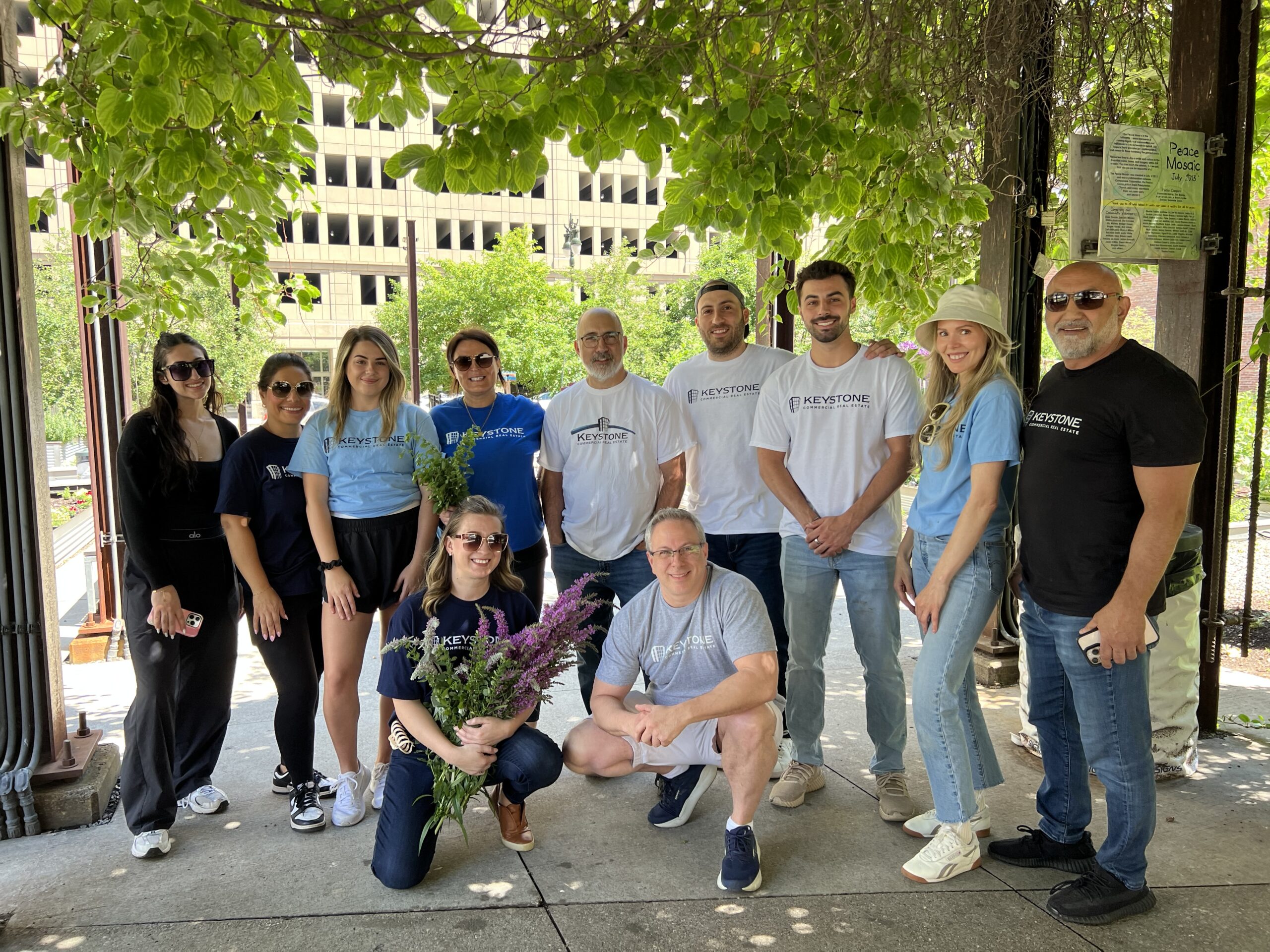
This week, the Keystone team headed into downtown Detroit to partner with The Greening of Detroit for a hands-on volunteer day. Our focus for the afternoon was at Lafayette Greens Garden. Spaces like Lafayette Greens are incredibly important in dense urban environments—they do not just beautify the city, but they provide critical pocket ecosystems that allow local wildlife and pollinators to thrive amidst the concrete.
Building a Safe Haven for a Crucial Ecosystem
We joined their efforts to help bring a brand-new Monarch Waystation butterfly habitat to life. Because monarch populations face severe threats from habitat loss, these waystations provide the vital resources needed to sustain their spectacular migration.
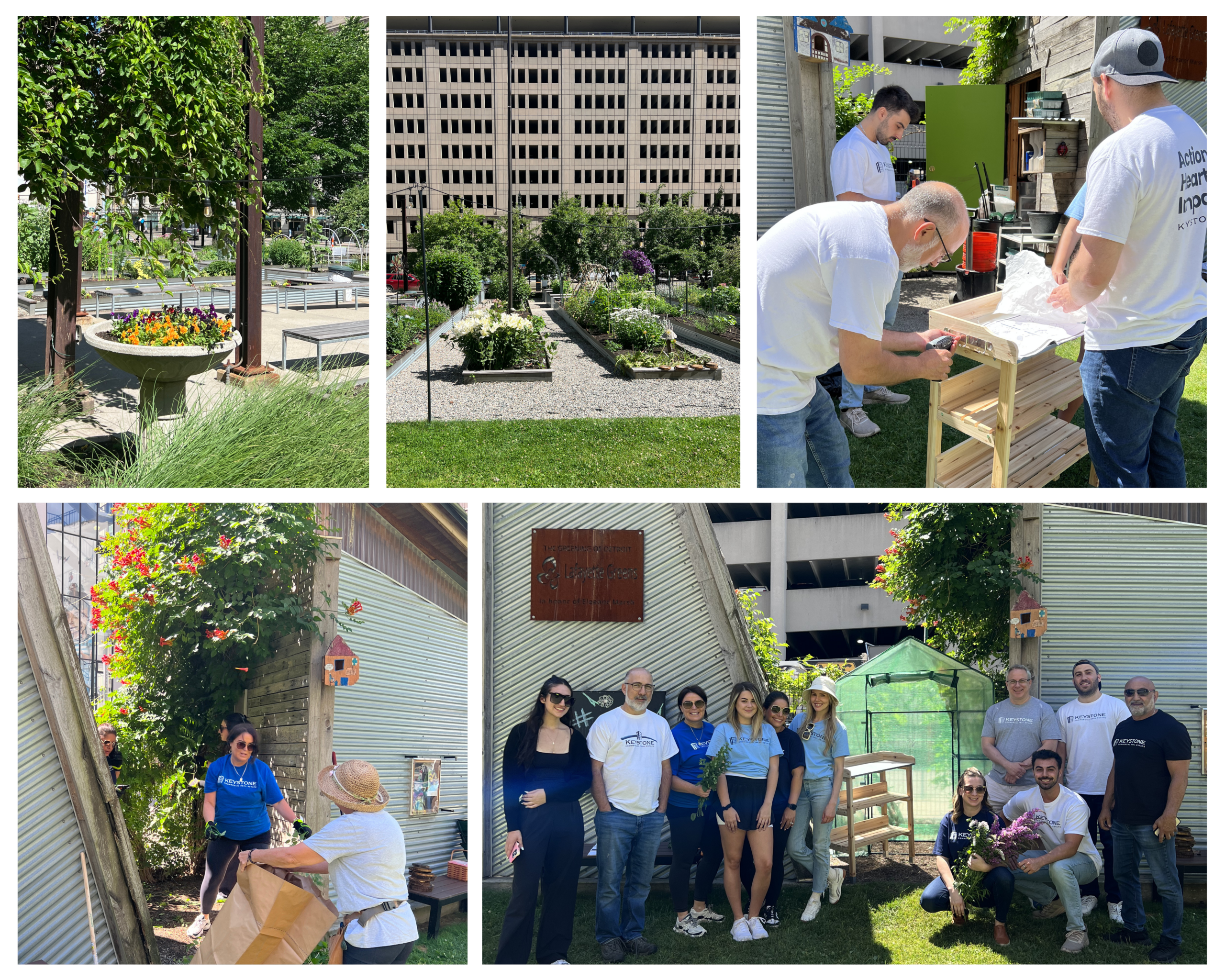
Rather than standard garden maintenance, our team took on a build-focused project to create lasting infrastructure. In just a few hours, we rolled up our sleeves to clear the site, assemble a workstation, and construct a caterpillar enclosure. The resulting space will serve as both a biological haven for transitioning butterflies and an educational learning hub for downtown visitors.
Championing a Greener Detroit
Partnering with The Greening of Detroit was an incredible experience for our team. Founded in 1989 to reforest the city, the non-profit has planted more than 166,000 trees, transforming vacant spaces into green infrastructure that improves air quality and mitigates urban heat. Beyond environmental greening, they run essential workforce development initiatives—like the Detroit Conservation Corps and the youth-focused Green Corps—providing job readiness training and meaningful career pathways for local residents.
Looking Ahead
While our build day is complete, the Monarch Waystation project is just getting started. The Greening of Detroit will continue to develop the site, adding vibrant new plantings and finishing the habitat with a project-specific mural to complete the space.
We look forward to sharing updates and photos once the entire project is officially completed. A huge thank you to the team at The Greening of Detroit for guiding us through the day and for their ongoing work to create a more sustainable city. Keystone is incredibly proud to support their mission through both our team’s volunteer hours and a financial contribution to help fund the completion of this vital urban waystation project.
Resources & How to Get Involved
Want to support urban greening or start your own pollinator habitat? Explore these local and national resources to learn more:
-
The Greening of Detroit – Discover upcoming community volunteer events, check out local tree-planting schedules, or support their essential green workforce development programs.
-
Lafayette Greens Garden – Located at the corner of Michigan Ave and Shelby St in downtown Detroit, the garden hosts public community events, movement classes, and volunteer opportunities throughout the summer.
-
Monarch Watch Waystation Program – Learn how the University of Kansas’s nationwide conservation program helps individuals, schools, and businesses build and register their own certified butterfly habitats.